


USAF’s ultrasonic technology.
Using sonication and cavitation, viruses and algae are effectively controlled in a sustainable way.
How it works
The power of ultrasonic cavitation
Step 1
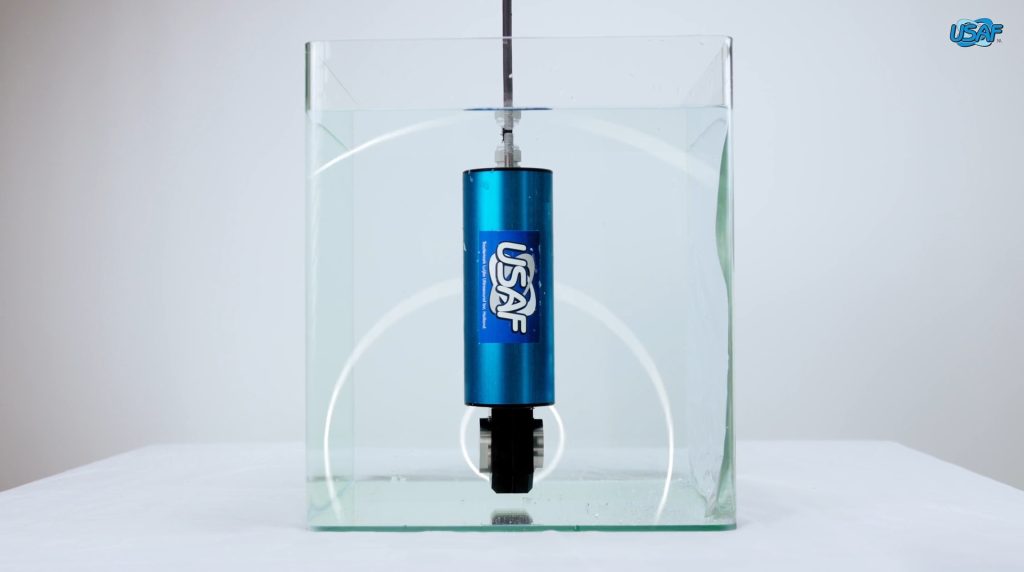
USAF sends sound waves into the water.
USAF.nl emits sound waves at a very high frequency into the water, causing the liquid to vibrate locally and initiating the cavitation process.
What is cavitation?
What is cavitation?
Cavitation is the process in which microscopic gas bubbles form in a liquid due to rapid pressure changes. The collapse (implosion) of these bubbles is a result of cavitation and causes noticeable effects such as shock waves and cell damage.
Step 2
Formation of microbubbles
What are these gas bubbles?
What are these gas bubbles?
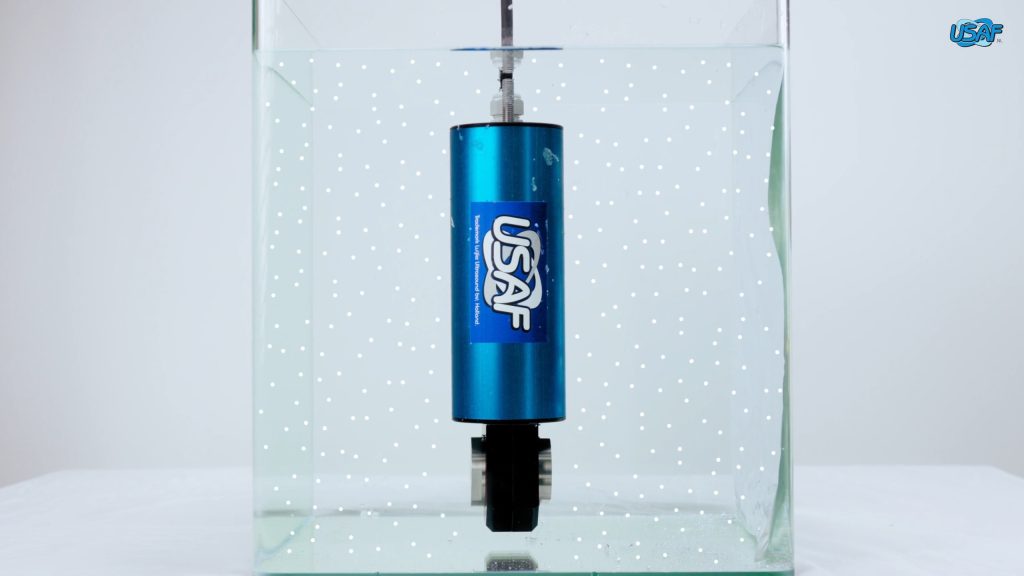
The microbubbles are tiny pockets of air or vapor that form temporarily between water molecules when the local pressure drops.
Step 3
Implosion of Microbubbles
Why do microbubbles implode?
Why do microbubbles implode?
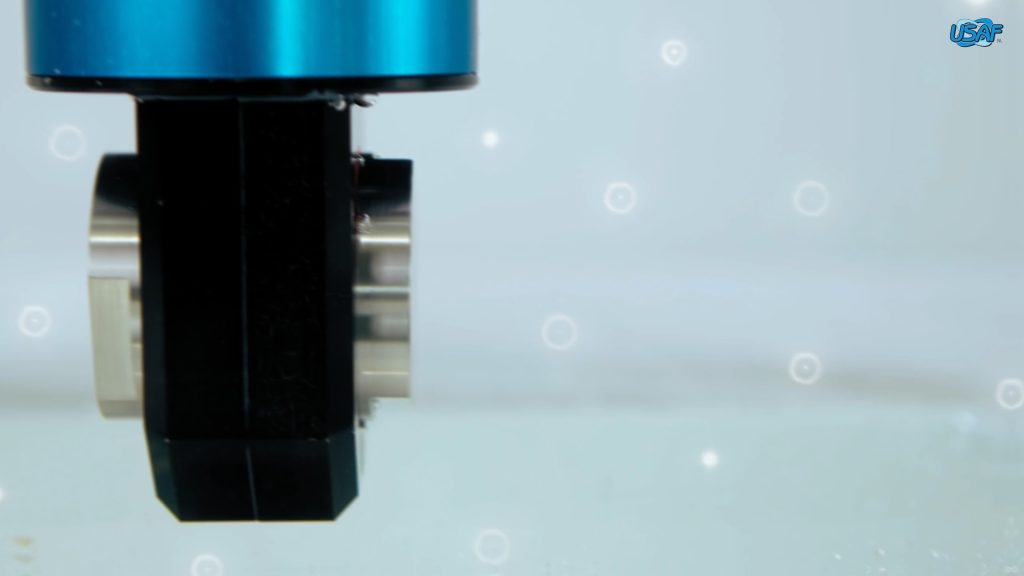
When the sound waves alternate between high and low pressure, the microbubble compresses during the high-pressure phase. It is as if the microbubble is being squeezed from the outside until it disappears.
Step 4
Destruction of Microorganisms
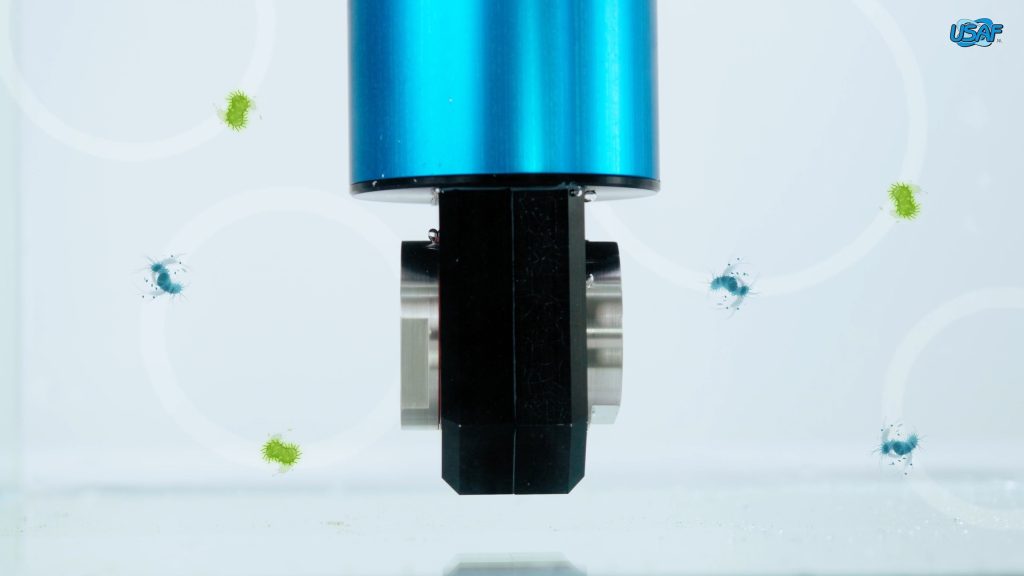
De krachtige schokgolven die vrijkomen na de implosie beschadigen de celwand of het celmembraan van bacteriën, virussen en andere micro-organismen. Hierdoor komt de celinhoud vrij en zijn de micro-organismen niet langer levensvatbaar.
Are the shock waves harmful?
Are these shockwaves harmful?
In our application, the shock waves have no effect on humans, plants, or animals. The process also poses no risk to existing installations.
Amplification with minimal chemicals
In some situations, a very small dose of chemicals (e.g. hydrogen peroxide or a mild oxidizer) can further enhance the effectiveness of ultrasound. In combined treatment, ultrasound makes the cell walls of microorganisms vulnerable, making it easier for chemical agents to penetrate. This results in a stronger and more reliable disinfection effect. Research shows that such combinations have a synergistic effect: the microorganisms are eliminated faster and more thoroughly than with either method alone.
This is how USAF works
See USAF in action.
Installing USAF
The installation of our USAF ultrasonic transmitters.
1. Mount USAF
2. Attach the weights
3. Ensure enough clearance
4. Installation without a float
If the water level remains relatively constant, or if the USAF is installed in a hydroponic pond, the ultrasonic transmitter can be mounted in a fixed position on a frame or bracket. Even in this case, ensure the USAF is always submerged so the transmitter can self-cool.